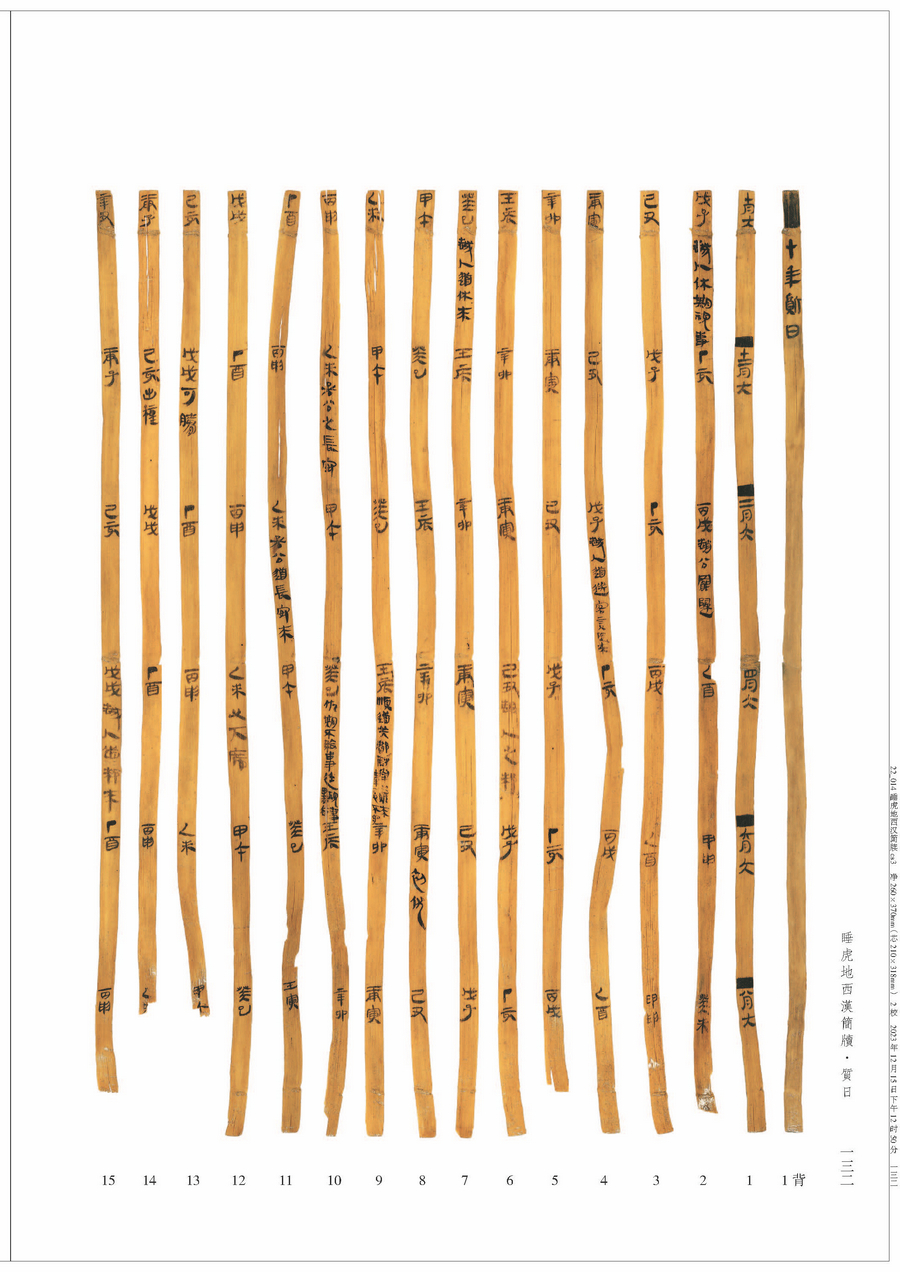
Bamboo Slips
Introduction
Bamboo slips, also known as bamboo strips, were a vital medium for writing in ancient China before the widespread use of paper. They were used extensively for documentation, record-keeping, and literary compositions during various Chinese dynasties, including the Qin (221-206 BC) and Han (206 BC-AD 220) dynasties. These slips provide invaluable insights into the history, culture, and administration of ancient China.
Historical Context
Bamboo slips, a primary medium for writing in ancient China, hold immense historical significance, dating back to periods preceding the widespread use of paper. Originating in the Zhou Dynasty and gaining prominence during the Warring States (475-221 BC), they saw extensive use throughout the Qin (221-206 BC) and Han (206 BC-AD 220) dynasties. The slips, often bound together with silk or hemp to form scrolls known as a "ce," served as the primary repository for legal, administrative, and literary works in early China.
The discovery of bamboo slips across various archaeological sites has provided deep insights into ancient Chinese governance, culture, and daily life. For instance, the Shuihudi bamboo slips unearthed in Hubei province revealed detailed legal documents from the Qin Dynasty, offering a glimpse into the bureaucratic processes of the time. Similarly, the Juyan slips, discovered in the arid regions of Inner Mongolia, contain personal letters and military dispatches, illustrating the lives of soldiers stationed on China's frontiers.
Moreover, the Mawangdui slips and silk manuscripts, unearthed in a Western Han tomb, are notable for their medical and philosophical texts. These manuscripts highlight the advanced state of knowledge in areas such as medicine and governance during the Han dynasty. The slips often contain information not preserved in other written forms, making them invaluable to historians for reconstructing historical narratives. A remarkable discovery in 2006 at Shuihudi, Yunmeng county, Hubei province, uncovered thousands of slips from a tomb belonging to a low-ranking Western Han official named Yueren. These slips contained detailed records of Yueren's work and life, spanning 14 years.
Bamboo slips were gradually replaced by paper following its invention, attributed to Cai Lun in the Eastern Han Dynasty (25-220 AD). However, the legacy of bamboo slips is enduring, influencing the development of Chinese writing and record-keeping.
Significance in Archaeology
The discovery of bamboo slips at various archaeological sites has significantly contributed to the understanding of ancient Chinese civilization. For instance, the Shuihudi slips have provided insights into the bureaucratic processes, calendar systems, and legal frameworks of the time. They also reflect the administrative efficiency and social order during the reign of Emperor Wendi of the Western Han Dynasty.
Contents and Usage
Bamboo slips covered a wide range of topics, including mathematics, law, medicine, and literature. The Shuihudi slips, for example, contained mathematical calculations, legal codes, and judicial documents regarding grain transport along the Yellow River. Additionally, during the Han Dynasty, slips were used for medical texts, as evidenced by findings from a tomb in Chengdu, which included classical medical writings attributed to successors of the renowned physician Bian Que.
Cultural Impact
The practice of writing on bamboo slips influenced the development of Chinese writing and record-keeping systems. They were an essential component of traditional Chinese culture, embodying the exchange and preservation of knowledge. The slips also highlighted the bureaucracy and governance methods of ancient China, providing a window into the lives of officials and common people alike.
Preservation and Restoration
Preservation of bamboo slips is challenging due to their organic nature, but careful archaeological methods and conservation have allowed many slips to survive thousands of years. Restoration efforts, like those undertaken at the Jingzhou Culture Relics Protection Center, focus on cleaning, stabilizing, and interpreting these artifacts to ensure their continued availability for study and exhibition.
Modern Study and Exhibitions
Today, bamboo slips are studied by historians, archaeologists, and philologists across the globe. Institutions such as the Gansu Jiandu Museum and the National Museum of Classic Books in Beijing host exhibitions that showcase these ancient texts, thus educating the public and preserving the heritage of Chinese civilization. They offer insights into the evolution of Chinese writing, the socio-political landscape of ancient times, and the enduring legacy of Chinese literature and administration.








